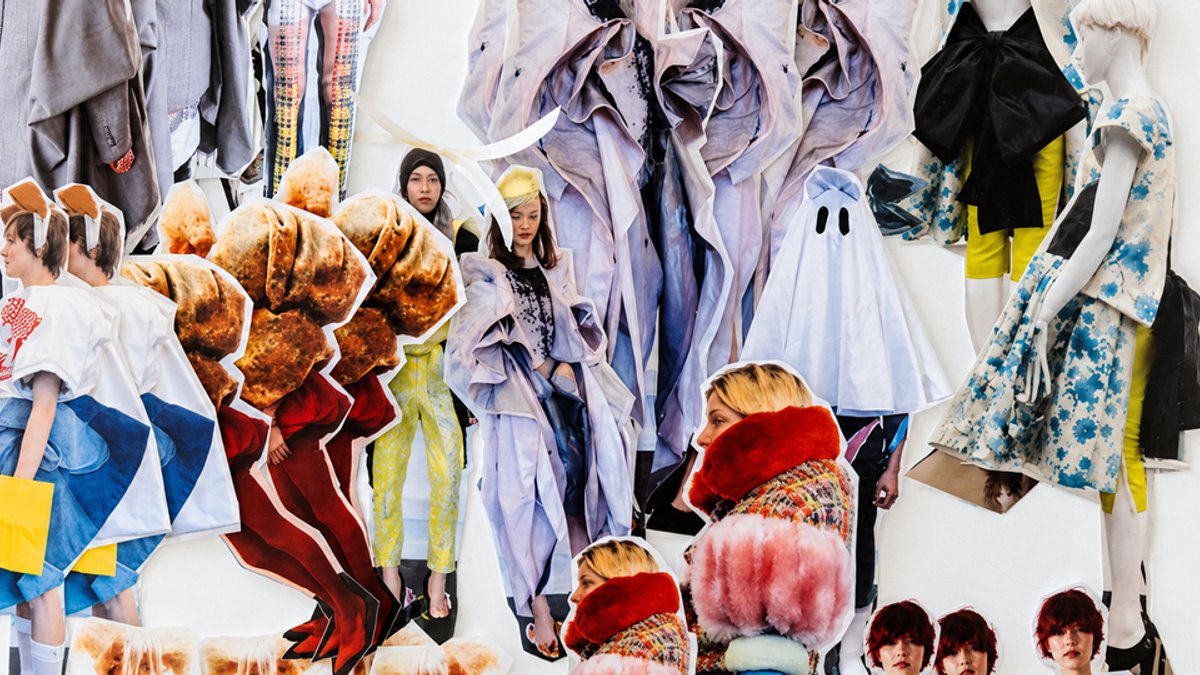
An exhibition in Antwerp isn’t just showing finished clothes. It reveals the work behind them—sketchbooks filled with crossed-out ideas, fabric swatches pinned and repinned, photographs of half-finished prototypes that never reached the runway.
LOOKS, LOOKS, LOOKS – The Antwerp Fashion Department at Work is a new exhibition at the city’s MoMu museum. The show centers on the Royal Academy of Fine Arts’ fashion department, a program that has influenced global fashion for four decades. Rather than celebrating final collections, it traces how ideas develop—from first sketches to completed garments—through student work, research materials, and behind-the-scenes documentation.
The process, not the product
Curators Brandon Wen and Tom Van der Borght chose not to create a hall of fame. There are no grand displays of iconic designs. Instead, the exhibition showcases the school’s teaching method, which blends artistic research, technical skill, and constant revision. Visitors observe how students refine their design language through trial and error, guided by instructors who value craftsmanship and structural understanding over quick results.
Related: Authenticity Matters in Modern Business Deals
The exhibition space reinforces this focus. It includes images of the academy’s ateliers and students at work, shifting attention from the objects on display to the people and environment that produce them. The emphasis rests on how clothes are made, not just the final pieces.
The timing aligns with a milestone. In 2026, the museum will celebrate 40 years since the Antwerp Six—Dirk Bikkembergs, Ann Demeulemeester, Walter Van Beirendonck, Dries Van Noten, Dirk Van Saene, and Marina Yee—gained international recognition. Their 1986 breakthrough transformed Antwerp into a fashion capital. Yet the exhibition avoids nostalgia, instead returning to the classrooms where those designers and many others first shaped their ideas.
A different pace in a fast industry
The fashion industry now operates at relentless speed, demanding constant collections, social media content, and instant trends. The Antwerp department rejects that pressure. Its model values research, treats mistakes as part of learning, and encourages students to develop their own voice before pursuing a recognizable style.
Related: Seven Cult Films Transport Viewers to Ancient Worlds
This approach feels deliberate. While brands chase viral moments, the academy insists on time—time to experiment, fail, and refine. It contrasts sharply with an industry that often prioritizes output over depth.
The museum and fashion department share a building, ModeNatie, which has simplified collaboration. The exhibition highlights this connection, demonstrating how design thinking is built through questioning, revising, and starting over.
In a field fixated on speed, the Antwerp method offers a distinct alternative. The exhibition suggests their true legacy may lie in something subtler: the belief that creativity requires space to grow.



Leave a Reply