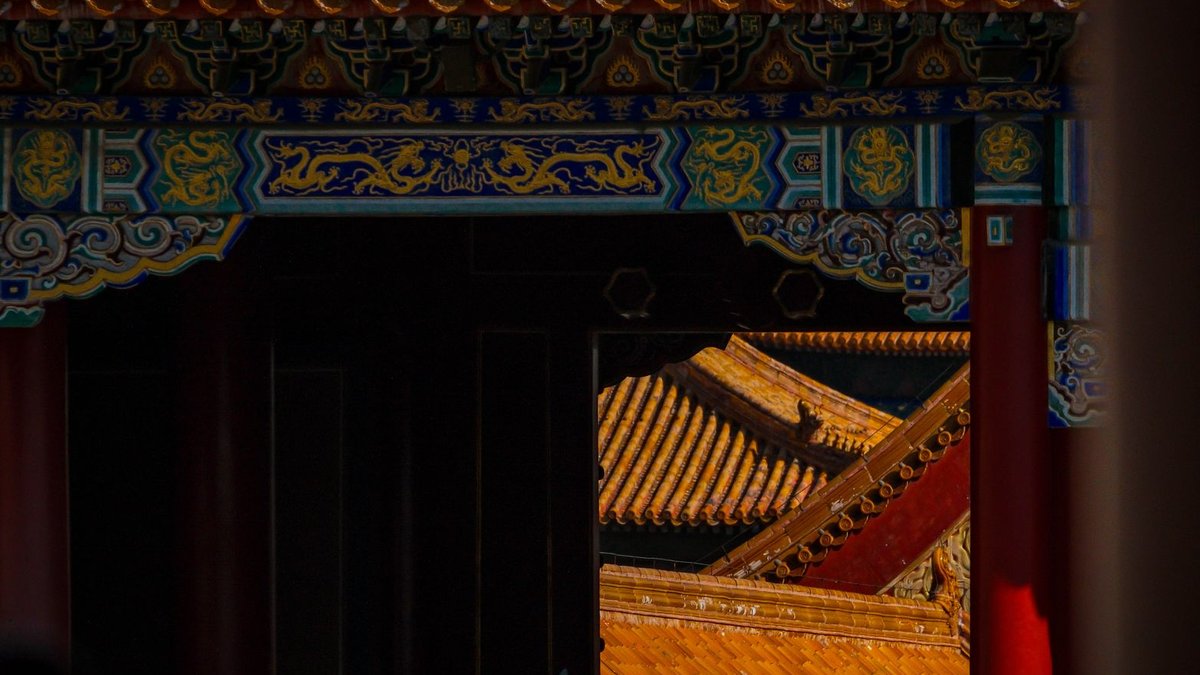
During Milan Fashion Week, HUI Milano debuted its Spring/Summer 2027 collection, THE FAN CODE, under designer Huizhou Zhao—Italy’s ambassador for China Style. The showcase opened with a circular fan as a cultural anchor, exploring Chinese heritage and women’s key role in shaping tradition through reinterpretation.
The fan became the key to a journey through movement, as a performer followed and crossed red threads stretching across an ancient Italian courtyard, evoking memory, time, and the connections between East and West. When the final thread was opened and the fan unfolded, the music changed and the first model appeared, marking the beginning of the fashion show.
Exploring Cultural Heritage
HUI Milano looked to the Miao women of Guizhou, who through weaving, embroidery, dyeing, and sewing had passed down collective memories, identities, and knowledge over time. Huizhou Zhao‘s work had centered on the dialogue between Chinese culture and the international fashion system, and this collection reflected his creative journey.
In THE FAN CODE, references to Chinese culture were translated into a contemporary fashion vocabulary, with motifs, colors, historical imagery, textures, and traces of craftsmanship fragmented, recomposed, and incorporated into new proportions and silhouettes. The collection brought together printed silk, translucent materials, and more structured fabrics, alternating softness and construction, transparency and coverage, movement and rigour.
A Living Language
For HUI Milano, tradition was not something to be observed from a distance, but a living language that could still be created, worn, and interpreted. They deliberately left the interpretation open, entrusting it to a succession of traces, a color, a motif, a gesture, a fabric, a silhouette, that progressively constructed an image of the contemporary East.
The true code of THE FAN CODE unfolded along the continuum of Chinese culture and through the people who still lived it, reinterpreted it, and contributed to its transformation. The fan was only the first clue, and the collection emerged from a question rather than an answer: what remained of a culture when it ceased to be an image of the past and became once again a material of the present?
As the collection showcased, the East does not reveal itself all at once, but unfolds through the people who live it and reinterpret it. Huizhou Zhao’s perspective on the contemporary East is a culture that is not defined once and for all, but remains in motion, capable of preserving its roots while continuing to generate new meanings.
The collection’s use of traditional Chinese elements, such as the fan, was not meant to be a static representation of the past, but rather a dynamic expression of the present. It was a way to explore the connections between East and West, and to create a new language that was both rooted in tradition and open to innovation.




Leave a Reply