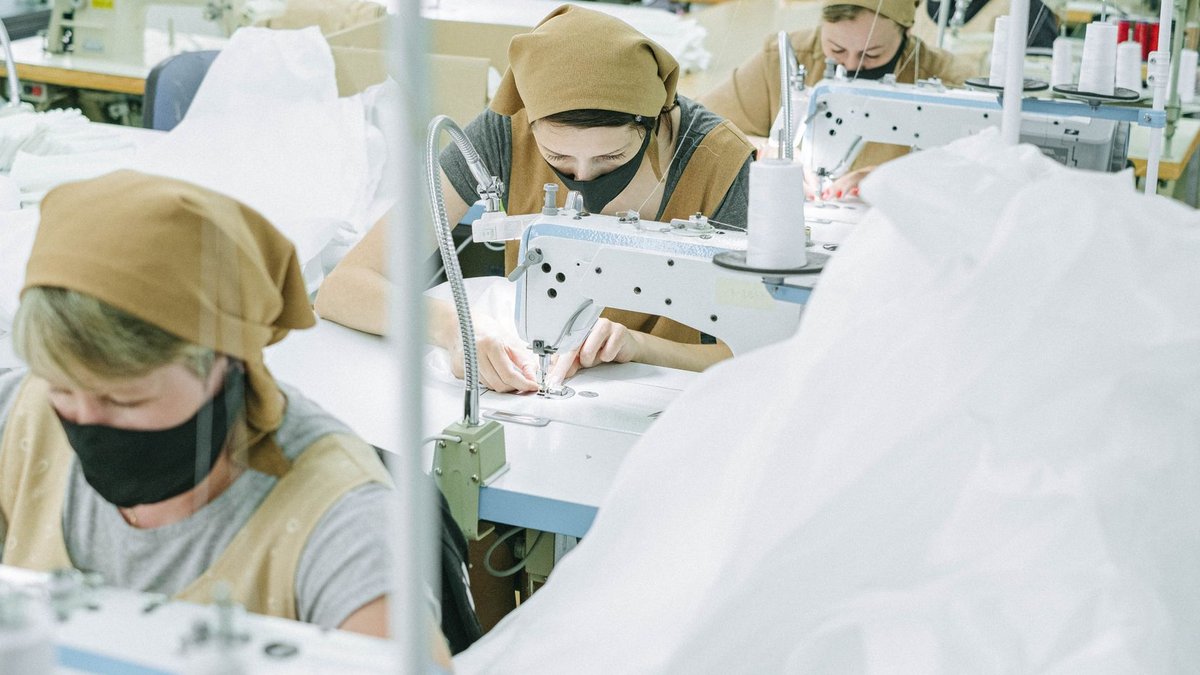
India and Bangladesh are competing for dominance in the supplier networks of major retailers like M&S, H&M, and Inditex. Recent reports suggest these retailers are considering shifting or diversifying orders from Bangladesh to India.
Supplier Presence in India and Bangladesh
A comparison of supplier networks reveals a close match between the two countries. As of 2025, Inditex had 423 suppliers in India and 466 in Bangladesh. H&M’s 2026 data shows 220 suppliers in India and 188 in Bangladesh. M&S had 85 suppliers in India and 68 in Bangladesh.
Potential Shift in Orders
The potential shift is not just speculation. Between November 1 and 18, orders worth around $254 million moved out of Bangladesh, nearly a tenth of the country’s monthly orders. India reportedly attracted a substantial portion of this diverted business, while Vietnam, Cambodia, and Indonesia also benefited.
Mithilesh Thakur, Secretary General of the Apparel Export Promotion Council (AEPC), notes that India is becoming more competitive due to free trade agreements (FTAs) with major trading partners. Meanwhile, Bangladesh’s advantages, such as its Least Developed Country (LDC) status and cost competitiveness, have diminished amid current developments.
India’s Strengths and Challenges
India boasts a stronger domestic supply-chain ecosystem, particularly in the cotton value chain, reducing its reliance on imported fabrics. Thakur also highlights India’s broader manufacturing capabilities, including its ability to produce complex designs and value-added products.
However, India faces challenges in scale and consistency, which affect global brands’ confidence in placing large orders. While larger manufacturers can deliver consistent quality, smaller ones struggle, creating uncertainty for buyers.
India’s factory efficiency is improving, with 2.4 garments produced per hour, compared to 2.8 in Vietnam and 3 in Bangladesh. Thakur expects India’s new labor codes to further enhance capacity by enabling double shifts.
Schemes like the Production Linked Incentive (PLI) and PM MITRA parks are expected to add capacity and strengthen India’s position in man-made fiber (MMF) apparel. Thakur emphasizes that India’s moment is now, asking, “If not now, when?”
Despite India’s potential, experts caution that Bangladesh’s established capacity, capabilities, and deep buyer relationships cannot be replaced overnight. Only prolonged unrest or major disruptions would push buyers to shift direction. As the garment industry is Bangladesh’s largest contributor to foreign direct investment (FDI), both manufacturers and the government will fight to maintain their position.
India is well-positioned to attract more business from major retailers seeking to reduce dependence on Bangladesh.



Leave a Reply