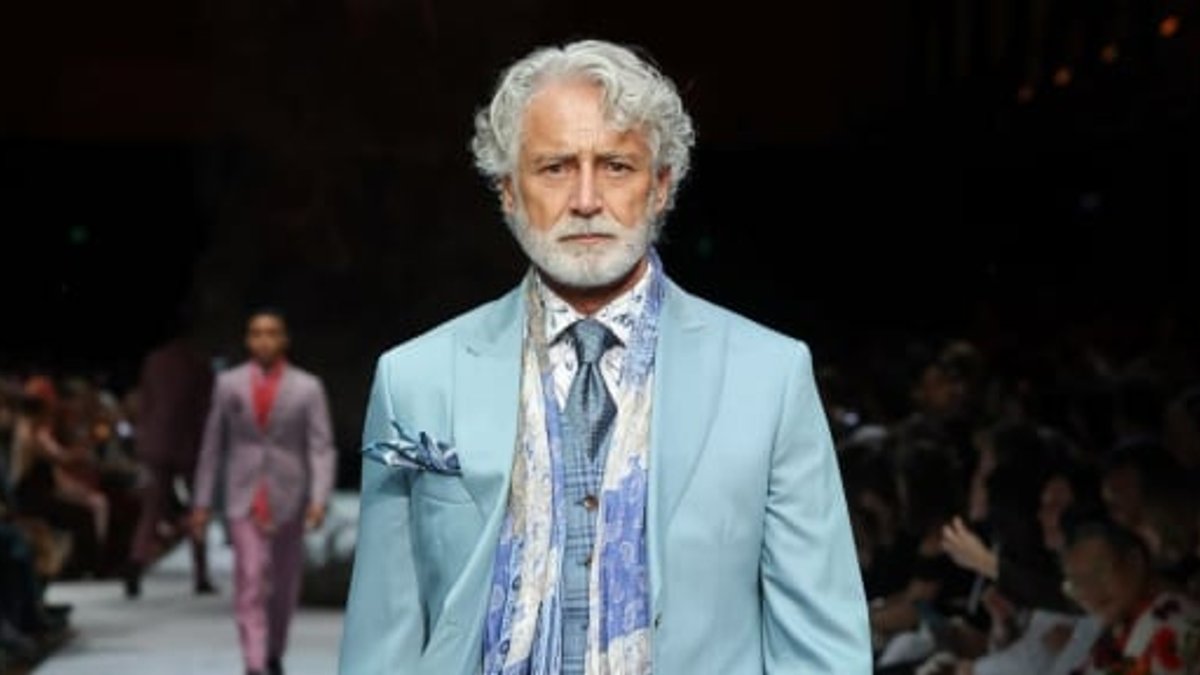
International mature model Joseph Solano argues that the fashion industry’s assumptions about age are more habit than strategy. The industry is built on change, challenging conventions and reshaping ideas of beauty, and at its best, reflects the people who wear the clothes.
Over recent years, the industry has broadened its visual language, representing a greater range of bodies, backgrounds, and identities on runways and in campaigns. However, it is clear that fashion still deserves more attention to adequately reflect the age of its consumers.
Age and Fashion
Australia’s population is getting older, with people aged 65 and over accounting for 18 per cent of the population in 2024-25, up from 8.9 per cent in 1975-76. By 2065-66, this share is projected to reach 24 per cent. Despite this, fashion imagery often does not reflect the ageing of the customer.
A 63-year-old model, who has walked at Australian Fashion Week and Melbourne Fashion Festival for designers such as Christian Kimber and MJ Bale, notes that age can become unremarkable once an older model is on the runway. The focus remains on the clothes, and a well-cut suit does not stop working because the man wearing it has silver hair.
This experience suggests that some of fashion‘s assumptions about age may be more habitual than intentional. Strong conventions in fashion are not necessarily permanent, and ideas about who can appear in a campaign or on a runway have evolved over time.
Representation and Commercial Sense
For brands with customers spanning several decades, showing a range of ages can make commercial and cultural sense. Representation is most convincing when it feels truthful, rather than tokenistic. An older man in a campaign should be there because he buys the product and wears it well, not just to tick a box.
This is particularly important in menswear, where men are often encouraged to develop their style as they mature. Yet, the imagery selling these products can still imply that style has an expiry date. By casting a wider net and looking beyond the habitual age bracket, fashion can create more authentic and relatable representation.
One opportunity for fashion is to look more closely at who is already here, rather than just imagining what comes next. By doing so, the industry can create a more inclusive and representative visual language that reflects the age and diversity of its consumers.




Leave a Reply